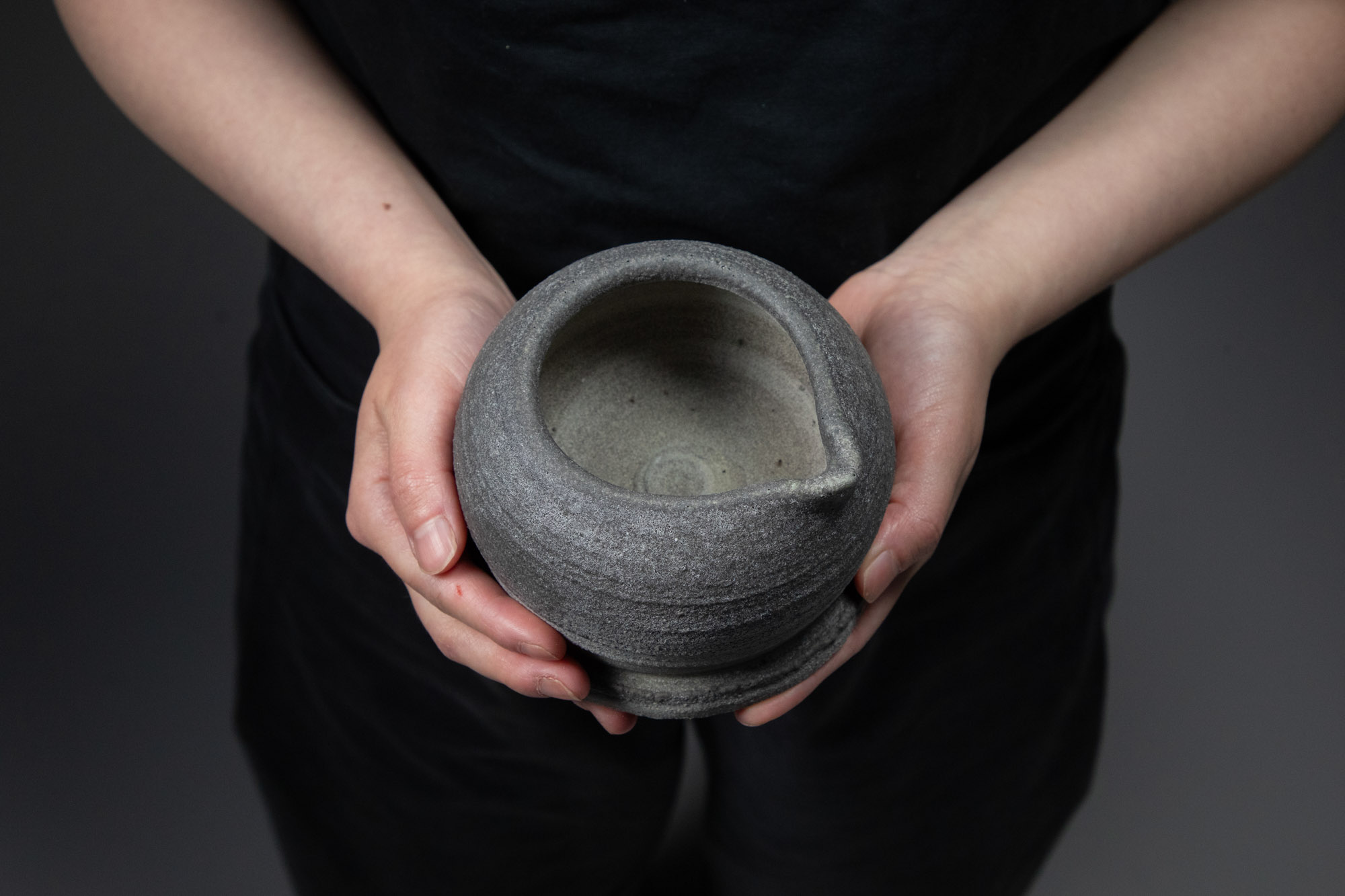
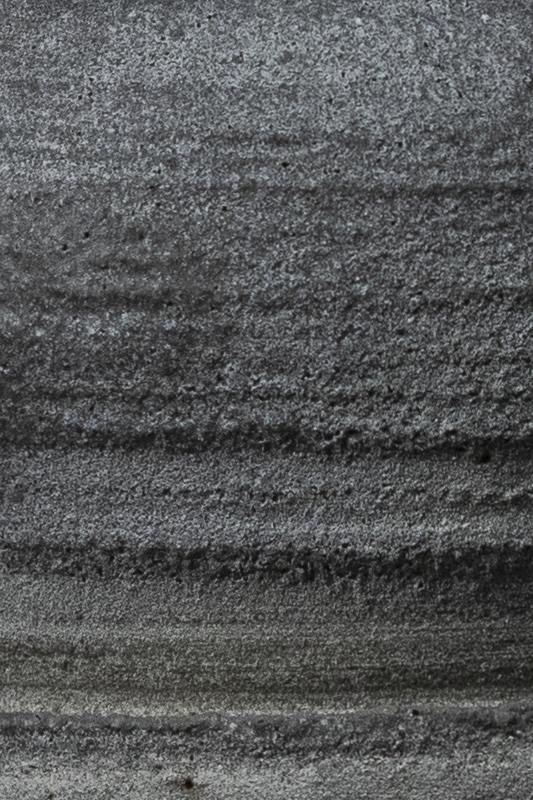
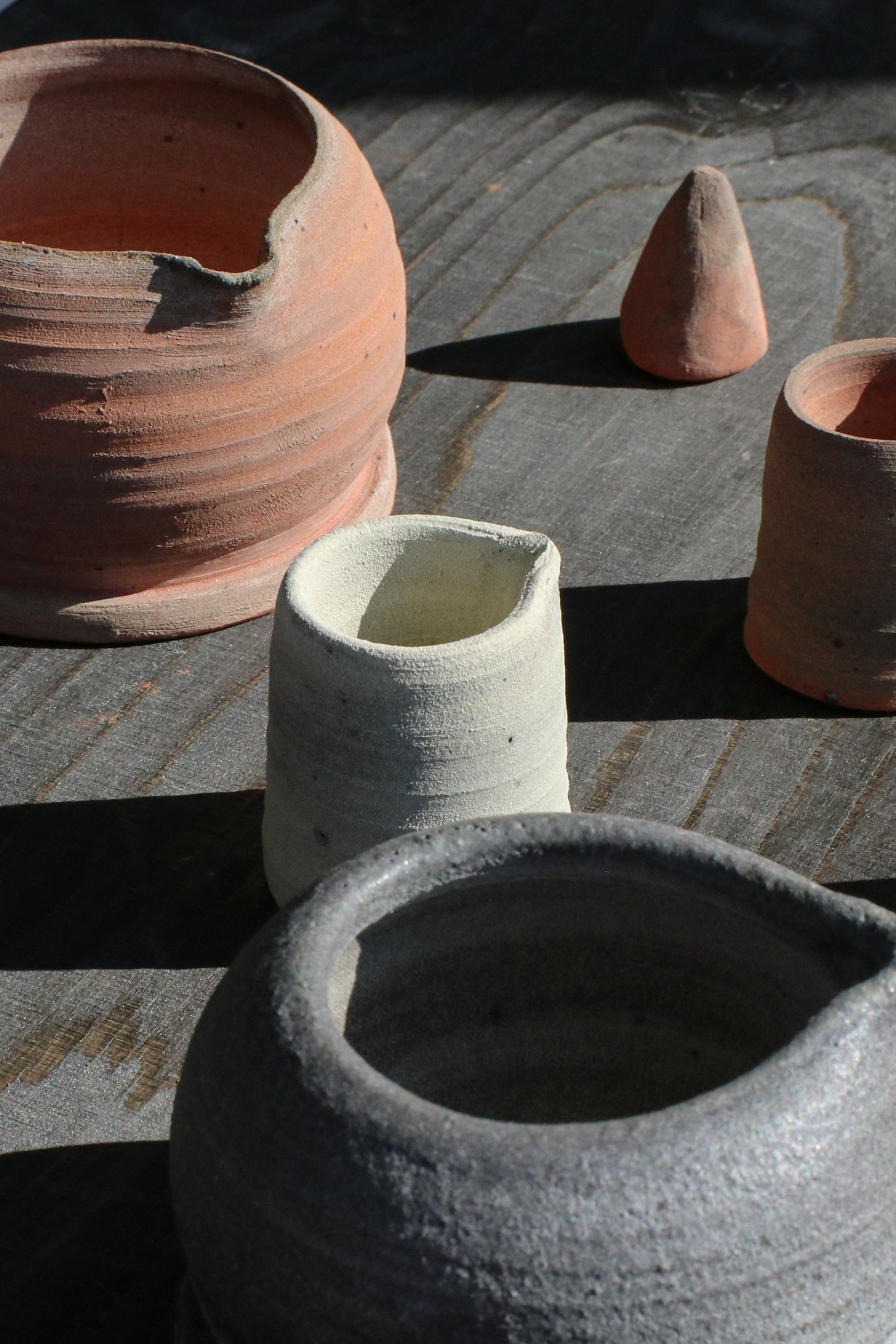
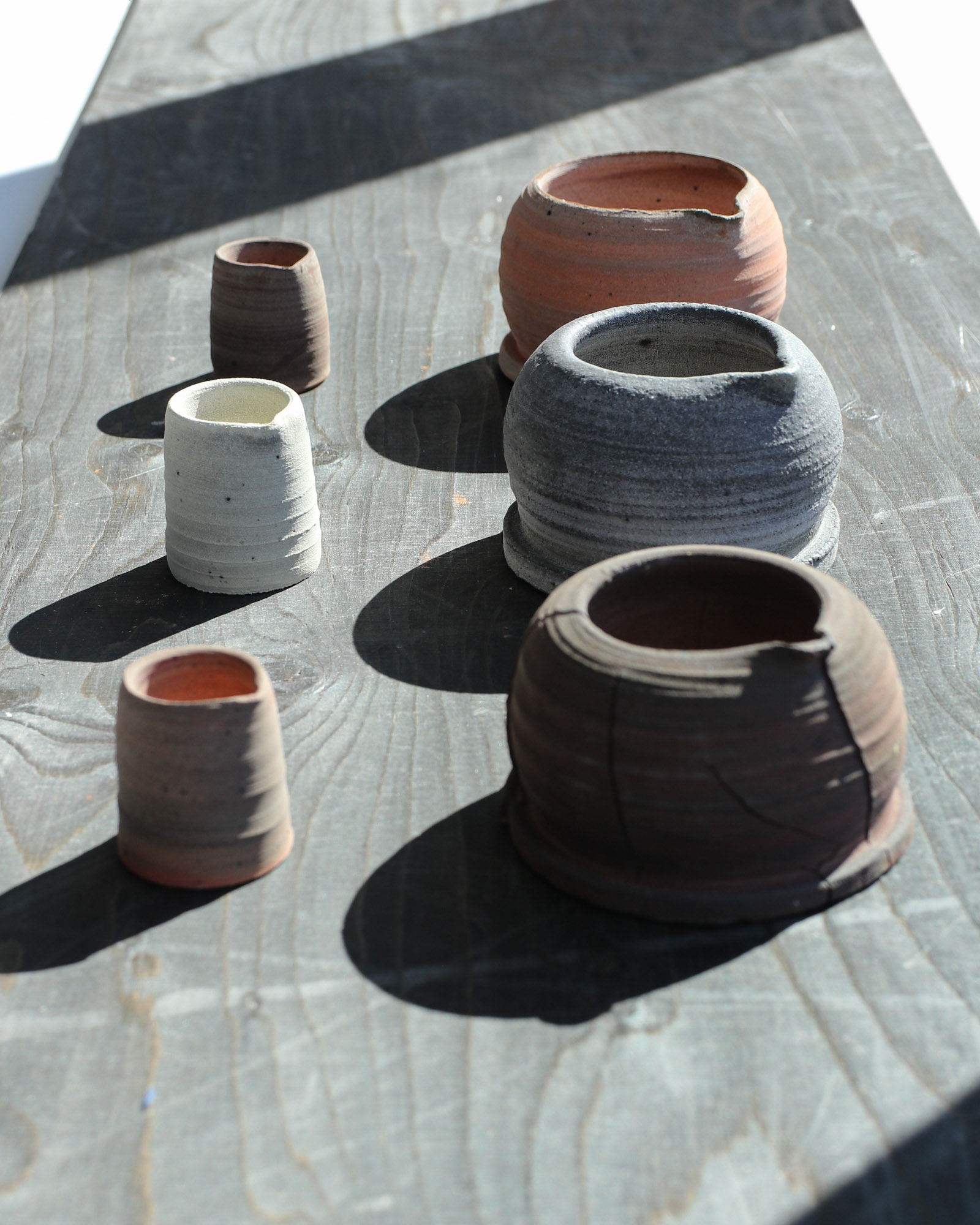
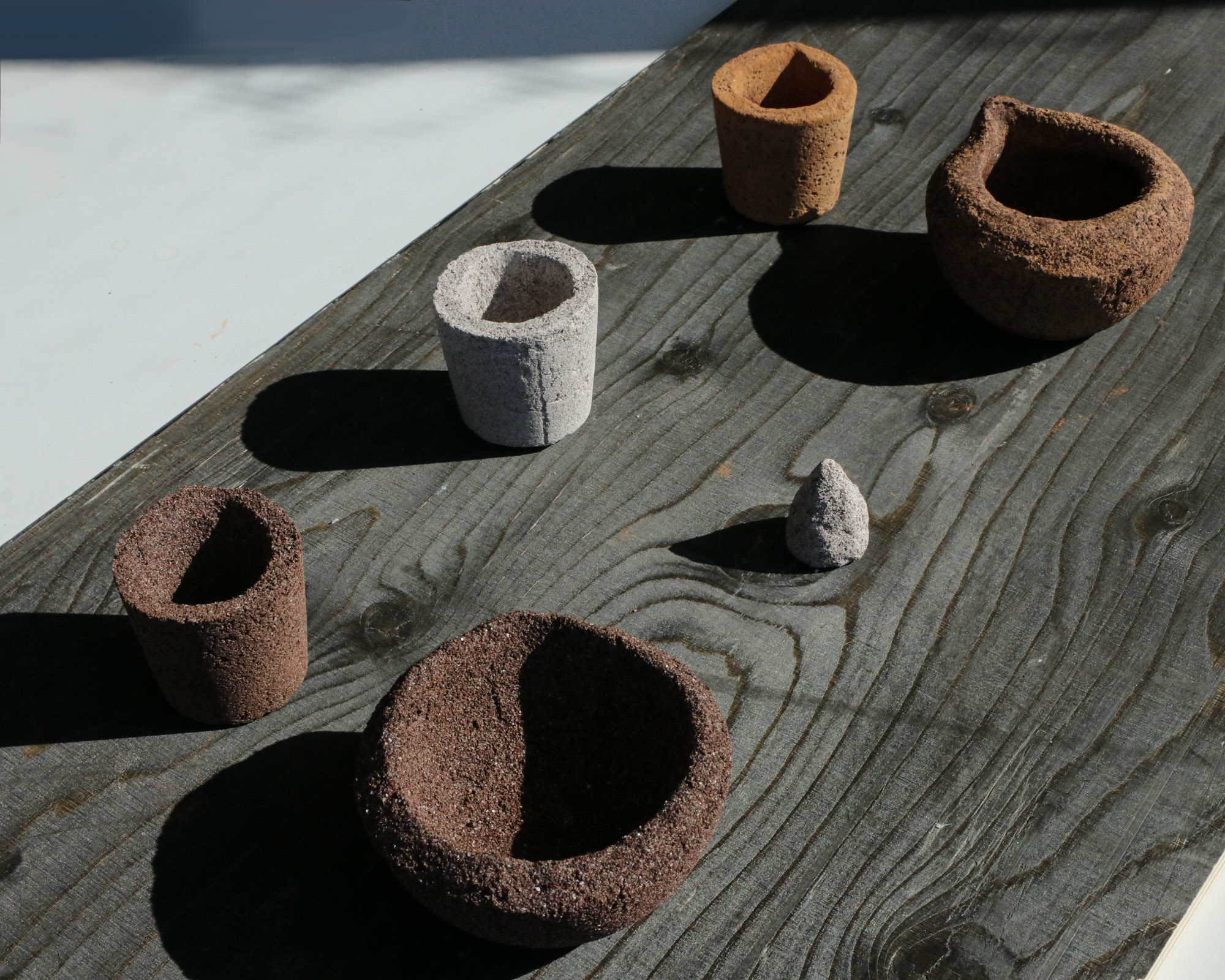
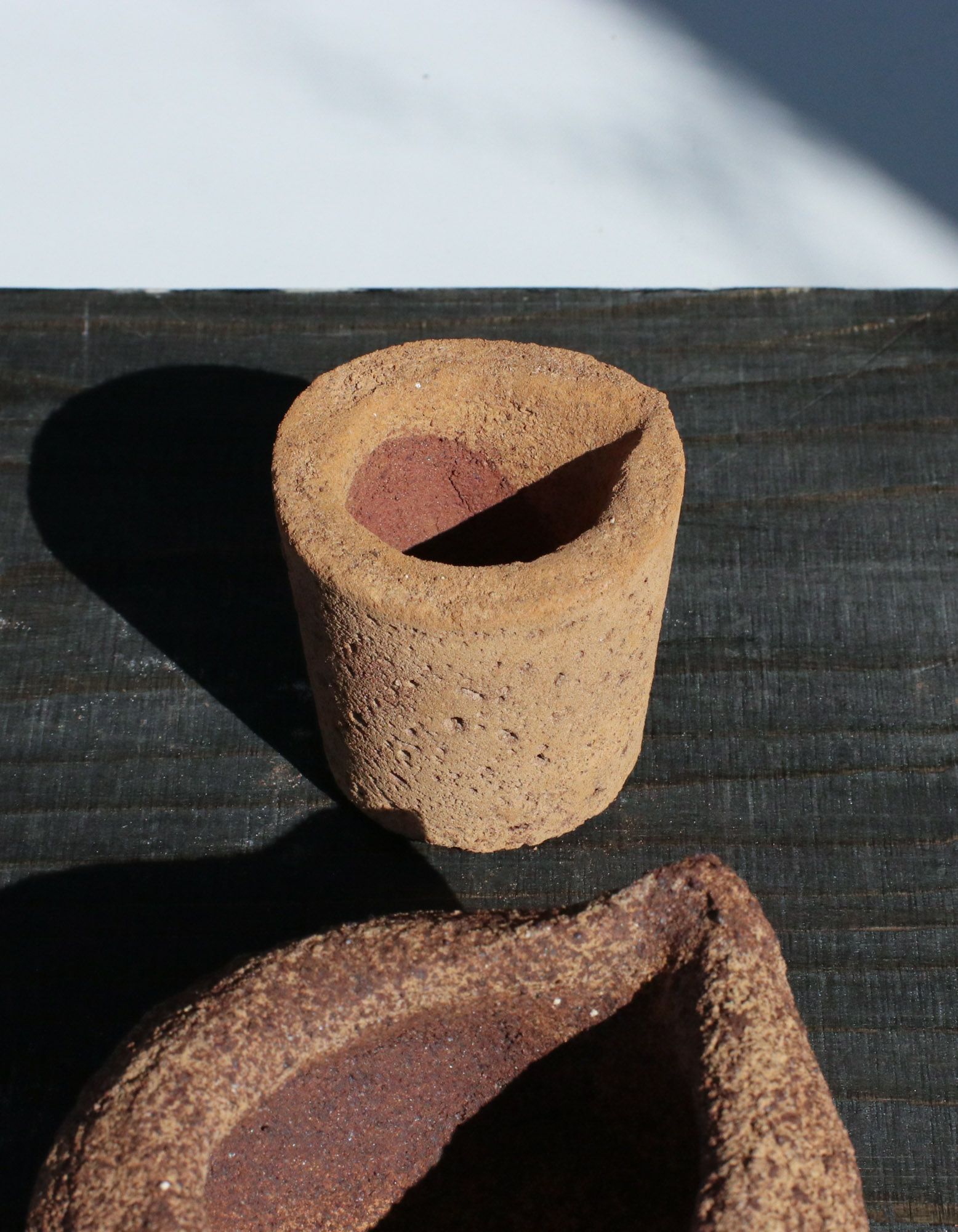
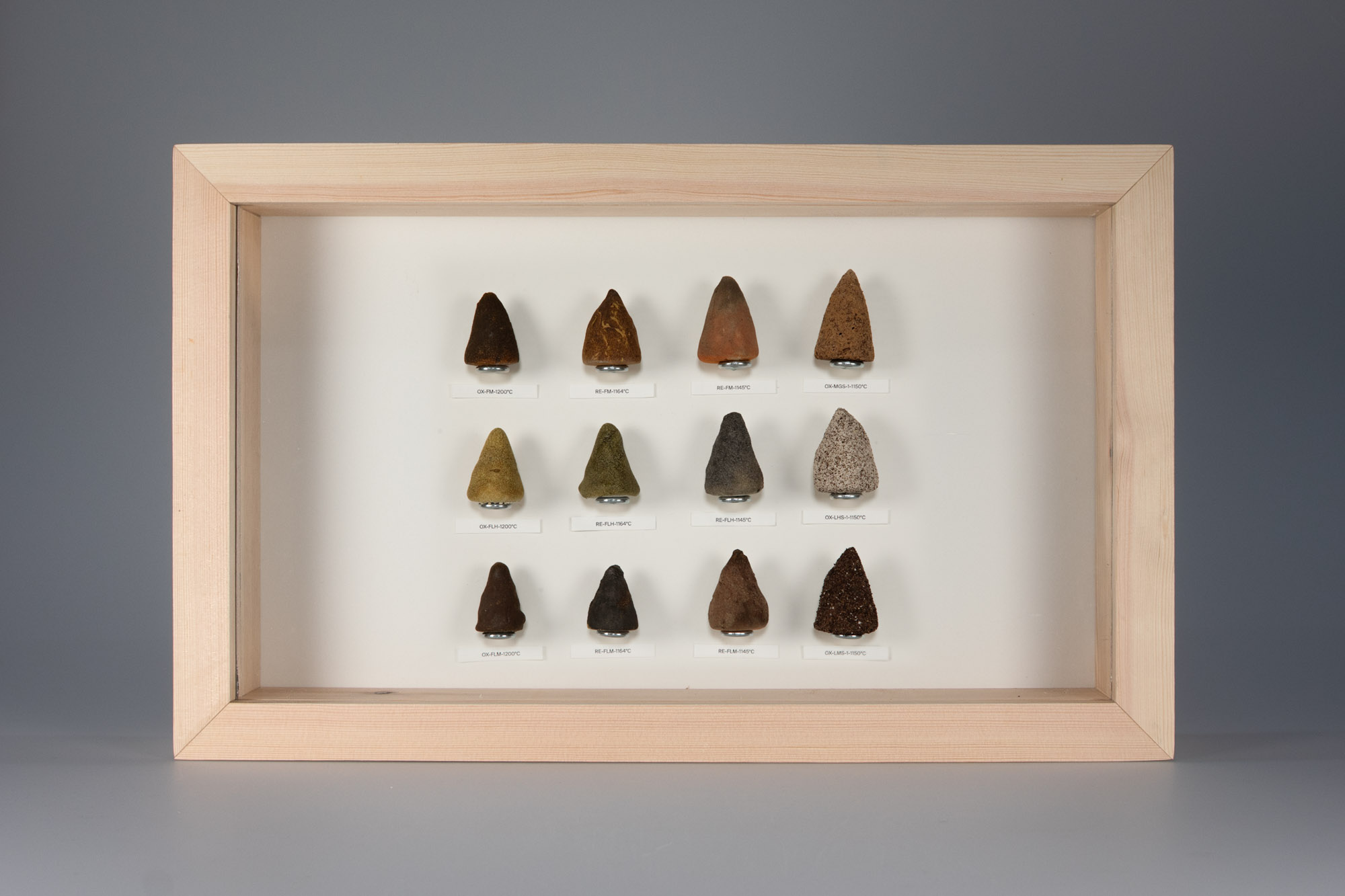
In today’s space industry, a lot of research is being conducted into how to extract and utilise resources efficiently. As space exploration, specifically the development of lunar habitats and missions to Mars, begins to be addressed in earnest, research into the regolith of the Moon and Mars is proceeding at a rapid pace. This project moves beyond this discourse, centred on efficiency and mission design, to propose a conceptual framework for reflecting on the boundaries of Earth through a design practice project involving the hand-crafting of ceramics.
Drawing on Bruno Latour’s concept of ‘Terrestrial’, this study views the Earth’s surface, orbit, and space infrastructure as a single, geological continuum. It translates simulants of lunar and Martian regolith into the language of ceramics, to explore the material continuity between Earth and space.
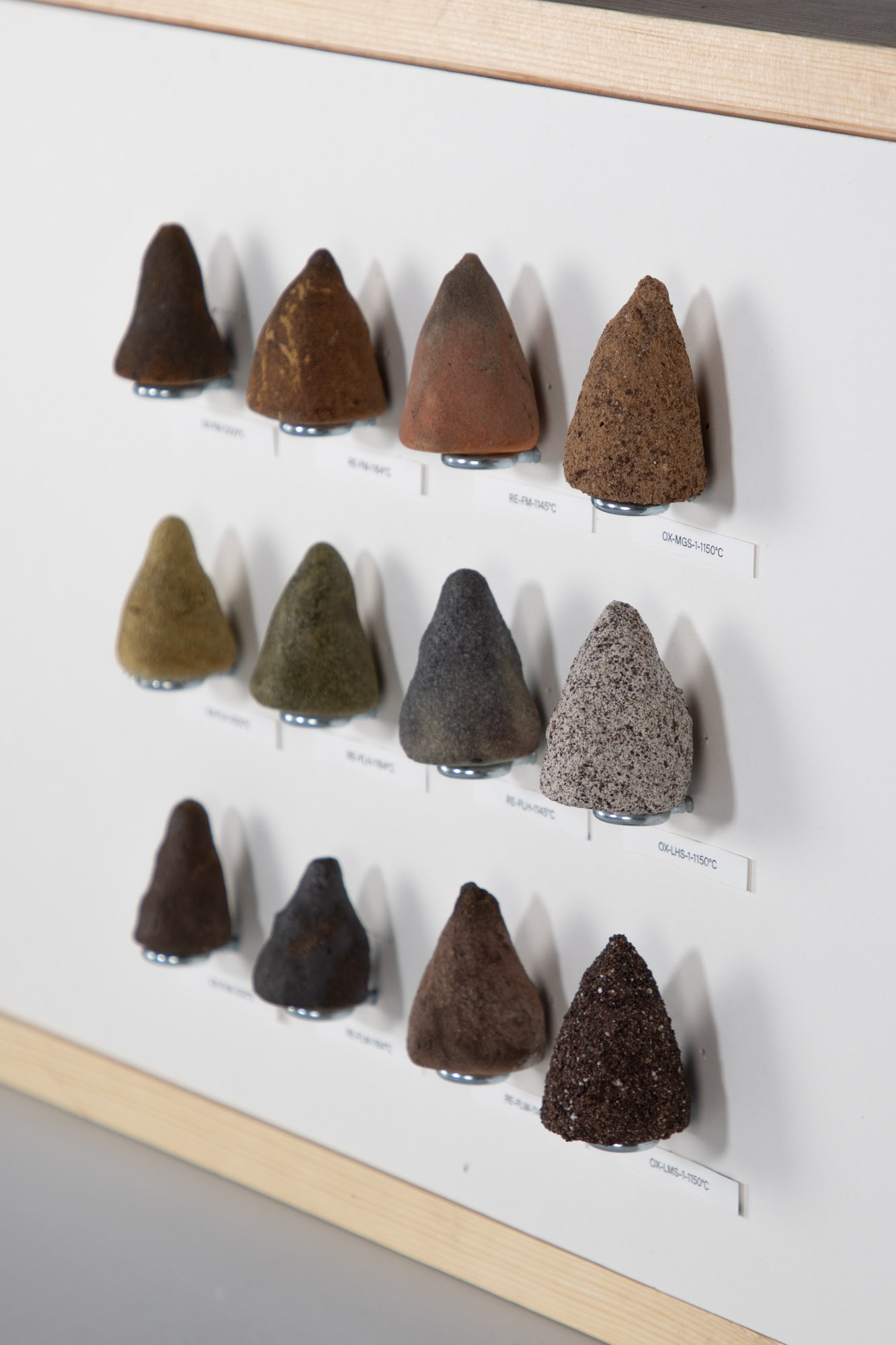
Experimentally, the oxide compositions of commercially available simulants; Martian Regolith Simulant (MGS-1), Lunar Highlands simulant (LHS-1), Lunar Mare simulant (LMS-1) were analysed, and optimal firing conditions were derived through water, mixing, and oxidation firing. Additionally, the oxide ratios of the Finnish clay were adjusted to create a mixture approximating the original simulants. The issue of FeO being substituted by Fe2O3 was corrected by adjusting the oxidation state through coal-reduction firing.

